Role of Affiliate Marketing in Digital Marketing

Role of Affiliate Marketing in Digital Marketing is one of the most important topics in today’s online business world. In today’s fast-growing online world, affiliate marketing has become one of the most powerful pillars of digital marketing. Brands are constantly looking for cost-effective ways to promote their products, while individuals are searching for online income opportunities. This is where digital affiliate marketing plays a vital role by connecting businesses and marketers in a performance-based ecosystem.


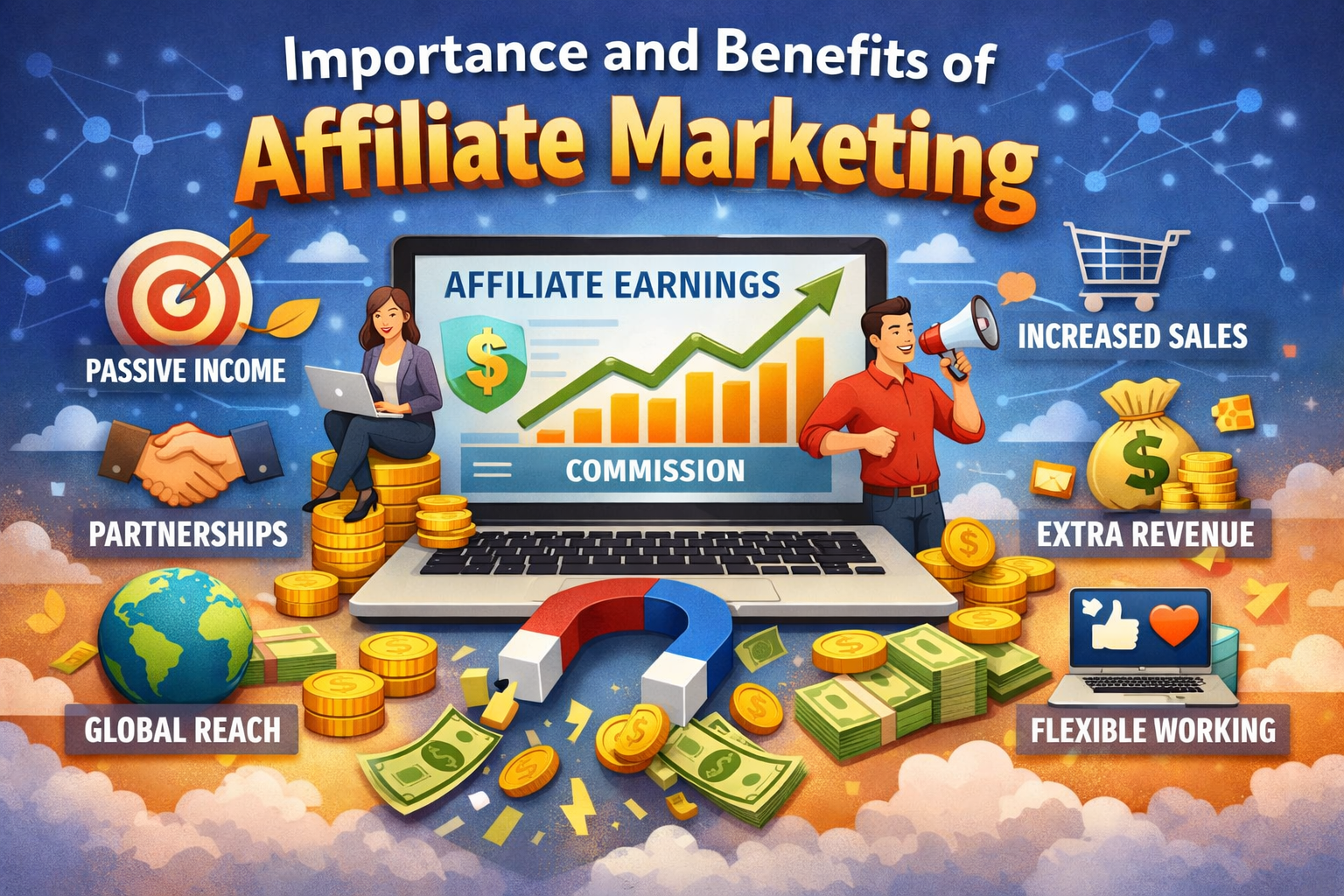
Affiliate marketing is a model where marketers promote products or services using unique affiliate links. When a user makes a purchase through those links, the marketer earns a commission. This system benefits both sides—companies get sales without upfront advertising costs, and affiliates earn money based on performance.

One of the biggest advantages of affiliate marketing in digital marketing is scalability. Businesses can reach a global audience through bloggers, content creators, YouTubers, and social media influencers. At the same time, affiliates can choose from thousands of affiliate marketing programs across different niches such as technology, fashion, finance, health, and education.

Among all programs, the Amazon Affiliate Program is one of the most popular and beginner-friendly options. Through Amazon affiliate program sign up, marketers get access to millions of products, trusted brand value, and easy link generation. Because of Amazon’s high conversion rate, it is often considered one of the best affiliate marketing programs for beginners.

For those just starting their journey, affiliate marketing for beginners offers a low-risk entry into digital marketing. There is no need to create a product, manage inventory, or handle customer support. Beginners can focus on learning SEO, content marketing, email marketing, and social media promotion—skills that are essential in digital marketing as a whole.


Another important aspect is affiliate networks, which act as a bridge between affiliates and companies. Popular affiliate networks provide tracking tools, payment security, and access to multiple brands from one dashboard. These networks make affiliate marketing more organized and trustworthy within the digital marketing ecosystem.


On the advanced side, high ticket affiliate marketing has gained popularity among experienced marketers. Instead of promoting low-priced products, affiliates focus on premium products or services with higher commissions. Although it requires more trust, authority, and targeted traffic, high ticket affiliate marketing can generate substantial income with fewer sales.

Overall, affiliate marketing strengthens digital marketing by adding a results-driven revenue model. It supports content marketing, SEO strategies, influencer marketing, and paid advertising efforts. For brands, it ensures measurable ROI, and for individuals, it creates opportunities for passive income and long-term online growth.


In conclusion, the role of affiliate marketing in digital marketing is undeniable. Whether you are a beginner starting with the Amazon Affiliate Program or an expert exploring high ticket offers through affiliate networks, affiliate marketing remains a powerful and evolving component of the digital marketing landscape.

Digital Marketing Fundamentals: A Beginner’s Complete Guide

Digital Marketing Fundamentals
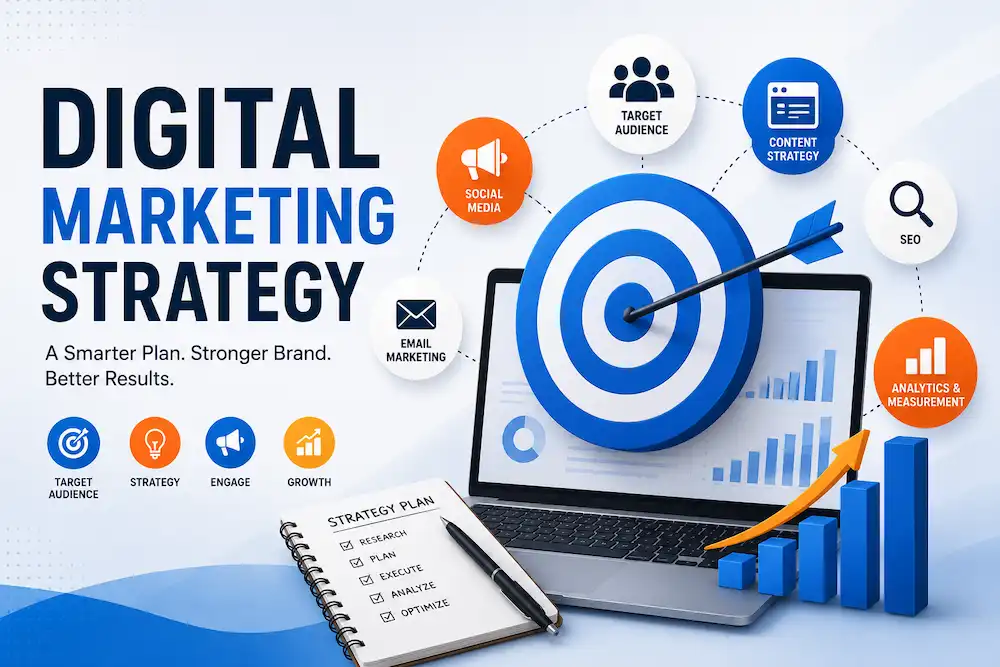
      Digital Marketing Fundamentals covering SEO, social media, and email marketing basics.

In today’s digital-first world, marketing has evolved beyond traditional methods like newspapers, billboards, and television ads. Businesses, brands, and professionals now rely heavily on online platforms to reach their audience. This is where Digital Marketing Fundamentals come into play.


Whether you are a student, job seeker, entrepreneur, or someone planning to switch careers, understanding the fundamentals of digital marketing is the first and most important step.
This guide explains digital marketing in simple terms, covering its core concepts, channels, and importance.

What Is Digital Marketing?

Digital Marketing is the process of promoting products, services, or brands using digital channels such as websites, search engines, social media platforms, email, and online advertisements.

In simple words, digital marketing means:

Reaching the right people, at the right time, through the right digital platform.

Unlike traditional marketing, digital marketing allows businesses to track results in real time, target specific audiences, and optimize campaigns for better performance.

Why Digital Marketing Is Important Today

Consumer behaviour has changed completely. Before making any decision, people search online, read reviews, compare options, and engage on social media. Digital marketing helps businesses adapt to this new behaviour.

Key reasons why digital marketing is important:

  • Cost-effective compared to traditional marketing
  • Allows precise audience targeting
  • Provides measurable and trackable results
  • Offers global reach with local targeting
  • Helps build brand awareness and trust

In today’s competitive market, businesses that ignore digital marketing risk falling behind.

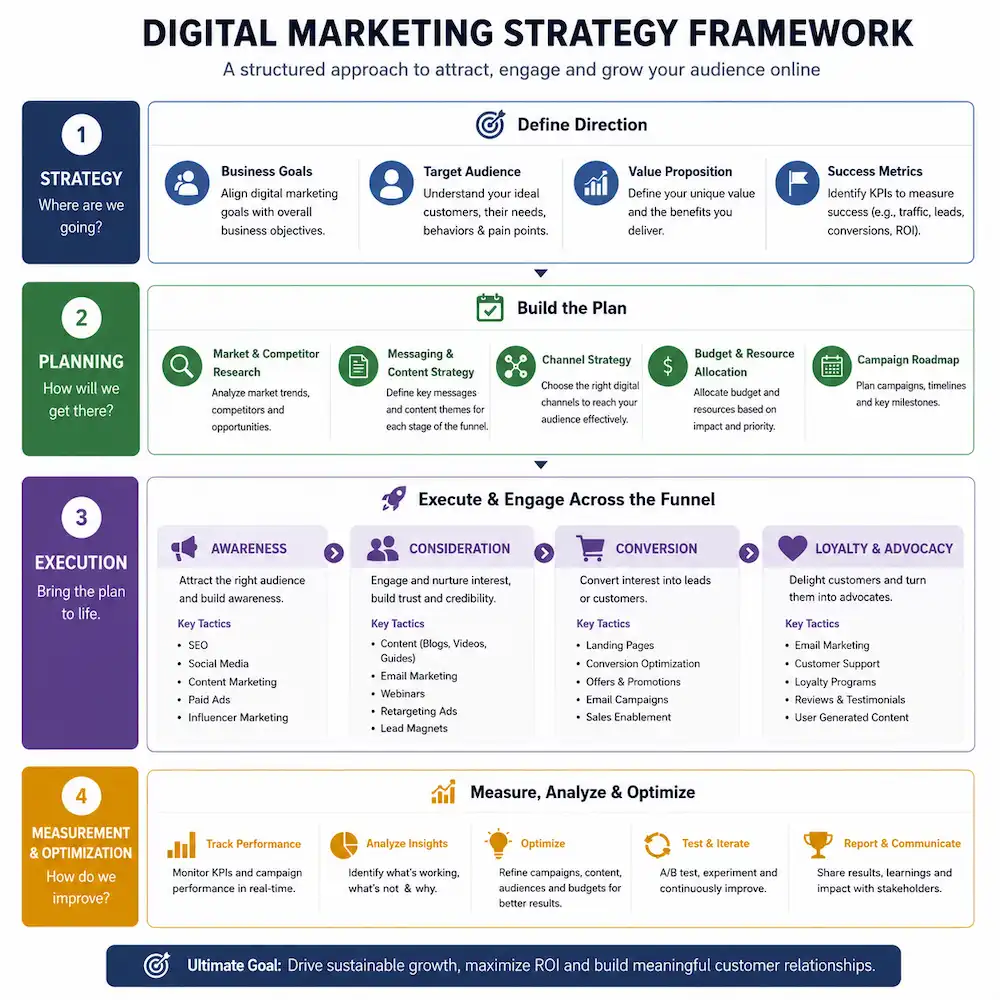
Core Digital Marketing Fundamentals

To build a strong foundation, every beginner must understand the core pillars of digital marketing.

Website – The Foundation of Digital Marketing

A website is the central hub of all digital marketing activities. All traffic from search engines, social media, ads, and emails eventually lands on a website.

A good website should be:

  • Fast-loading
  • Easy to navigate
  • Secure and user-friendly
  • Optimized for search engines

Without a well-structured website, digital marketing efforts cannot deliver effective results.

Search Engine Optimization (SEO)

SEO (Search Engine Optimization) is the process of improving a website’s visibility on search engines like Google through organic (non-paid) results.

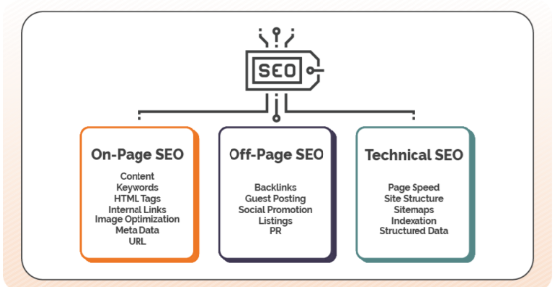
Main elements of SEO include:

SEO helps websites rank higher, attract quality traffic, and build long-term credibility.

Content Marketing

Content marketing focuses on creating valuable, relevant, and informative content to attract and engage users.

Common types of content include:

  • Blog articles
  • Website content
  • Social media posts
  • Videos and reels
  • Infographics and guides

High-quality content:

  • Solves user problems
  • Improves SEO performance
  • Builds trust and authority
  • Increases conversions

This is why content is considered the backbone of digital marketing.

Social Media Marketing (SMM)

Social media platforms have become powerful marketing tools. Social Media Marketing involves using platforms like Facebook, Instagram, LinkedIn, and YouTube to promote brands and engage audiences.

Benefits of social media marketing:

  • Increases brand visibility
  • Builds audience relationships
  • Drives traffic to websites
  • Generates leads and sales

Both organic content and paid social media advertising play a crucial role in growth.

Search Engine Marketing (SEM) / Paid Advertising

SEM refers to paid marketing strategies, mainly through search engine ads.

Paid advertising offers:

  • Immediate visibility on search results
  • Highly targeted audience reach
  • Full budget and performance control
  • Measurable return on investment

While SEO is a long-term strategy, paid ads help achieve quick results when used effectively.

Email Marketing

Email marketing remains one of the most effective digital marketing channels with high return on investment.

Email marketing helps to:

  • Nurture potential customers
  • Maintain long-term relationships
  • Promote offers and updates
  • Increase repeat sales

When personalized and relevant, email marketing builds trust and loyalty.

Analytics and Performance Tracking

One of the biggest advantages of digital marketing is the ability to track and analyze data.

Analytics tools help marketers understand:

  • Website traffic behavior
  • Traffic sources
  • User engagement
  • Conversion performance

Data-driven decisions allow marketers to improve strategies and achieve better outcomes.

Tools used in Digital Marketing
Some commonly used digital marketing tools

Tools Used in Digital Marketing

Some commonly used digital marketing tools include:

  • Google Analytics
  • Google Search Console
  • Google Ads
  • Social media management tools
  • Email marketing platforms

These tools help in planning, executing, and measuring digital marketing campaigns.

Career Opportunities in Digital Marketing

Learning digital marketing fundamentals opens doors to multiple career paths such as:

  • Digital Marketing Executive
  • SEO Specialist
  • Social Media Manager
  • Content Marketer
  • Performance Marketer
  • Freelancer or Consultant

Digital marketing skills are in high demand across industries.

Conclusion

Digital marketing is no longer optional—it is essential. Understanding the fundamentals of digital marketing such as website optimization, SEO, content marketing, social media, paid advertising, email marketing, and analytics builds a strong foundation for success.
Whether your goal is career growth, business expansion, or personal branding, mastering digital marketing fundamentals is the first step toward long-term digital success.

SEO : (Search engine optimization)

In today’s digital world SEO can be a game – changer for small business or local markets. In both big and small markets, SEO isn’t just an option – it’s a must have strategy for long – term business success.

First we need to know the word SEO comes from where. Several account points to 1997 as the year the term “search engine optimization was first used. One story involves the Band Jefferson Starship, whose website’s ranking improved after its manager started optimizing it. But SEO mainly originated in the mid-1990s and the term was coined around 1997,possibly by a band manager or a marketing executive, after web pages started outranking their original content.

Founder :

 There is no single “ founder” of SEO, as it evolved over time with many contributors, but Bruce Clay is widely recognized as the “father of SEO”. While Google’s algorithm is the foundation , individuals like Bruce Clays and Leland Harden are considered early pioneers who helped establish SEO as an industry.

Types of SEO :

There are mainly three types of SEO.

 On – Page SEO

 Off – Page SEO

Technical SEO

On Page – SEO :

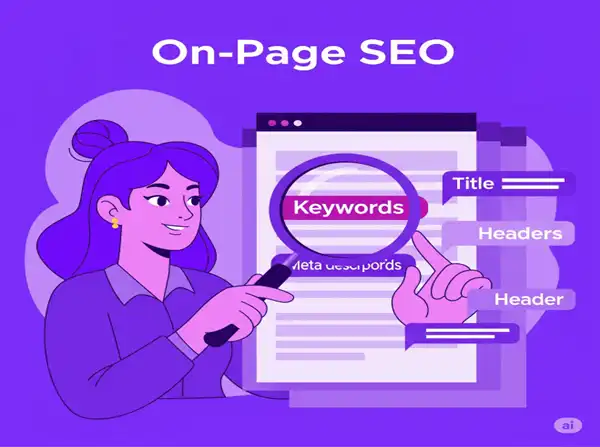
 On – Page SEO is the process of optimizing web pages and their content for both search engines and users. Its can help rank pages higher on Google and drive more organic traffic. Common tasks associated with On – Page SEO include optimizing for title tags, internal links and content.

Checklist:

Title:

The title tag is the most important on page  SEO element and usually target keywords present in this content types helps return relevant pages on search engines.

Target Keywords :

Confirm that you’re targeting the right keywords and that they haven’t been overused. Make sure your content satisfies the search intent behind your target keywords.

Content :

Create unique ,valuable, and use – focused content that satisfies the search intent

Images & Videos : 

Use high quality, appropriately sized, and compressed images with descriptive file name and alt tags.

            Include high quality, relevant, and optimized videos to enhance user engagement.   

Meta description :

Write a compelling ,unique description with your keywords to encourage clicks.

Heading :

Use a clear heading structure (H1,H2,H3etc.), with your main keywords in the H1 tag.   

Why on – page SEO is important 

Higher ranking:

Proper on – page SEO helps your pages rank higher in search engine result pages.

More organic traffic :

This leads to more qualified visitors finding your content through search engines.

User experience :

Many on – page factors, such as site speed and high – quality content, directly improve the user experience.

Full control :

Unlike off – page SEO, which relies on external factors, on – page SEO is entirely within your control, making it a reliable strategy to build upon.

Off – Page SEO : 

Off – Page SEO is a type of search engine optimization that uses off – site optimizations to improve a website’s or page’s rankings in relevant search results. Off – site optimizations occur outside your site and include link building, local citations and more.

Checklist :

Backlink audit and building:

Focus on building high – quality backlink from reputable sites.

Competitor analysis :

Analyze your competitor’s backlink profiles to find opportunities and understand their strategies.

Local SEO:

Optimize your Google My Business profile, encourage customer reviews and ensure your business is listed in local directories.

Brand building :

Earn brand mentions share content on social media, and build a strong social media presence.

Content promotion:

Submit unique content to sites like document sharing, image submission and video submission platforms.

Influencer marketing :

Collaborate with influencers to expand your reach.

Why off – page SEO is important 

Higher search engine rankings:  

Off – page SEO helps your website rank higher on search engine results pages (SERPs) by showing search engines that other sites endorse your content as valuable.

Increased domain authority :

Building backlinks from reputable websites strengthens your website’s authority, which is a key factor in improving search rankings.

Improve trust and credibility :

Actions like getting positive reviews, mentions in the media, and links from authoritative source signal to search engines that your site is a trustworthy and reliable source of information.

More referral traffic:

Backlink and social media shares can drive visitors directly to your website, leading to more referral traffic.

Enhanced brand awareness :

When other websites, social media platforms, and forums mention your brand, it increases your brand’s visibility and recognizability.

Expanded online presence :

Off – page activities like content sharing and social media engagement extend your digital footprint beyond your own website.

Better local search visibility :

Citations and reviews can boost your local search engine optimization (SEO) presence, making your business more visible in local results.

Types of SEO

Technical SEO: 

Technical SEO is about improving your  website to make it easier for search engines to find, understand, and store your content. It also involves user experience factors. Such as making your website faster and easier to use on mobile devices.

Checklist: 

Crawlability :

Crawlability is about ensuring that search engine bots can efficiently explore and index your website. Here are the key steps:

Create an XML sitemap:

This serves as a roadmap for search engine bots to navigate your site’s content.

Robots.txt file:

Configure it correctly to allow or disallow bots from crawling specific parts of your website.

Fix broken links:

broken links can hinder the crawling process, so regularly check and repair them.

Minimize redirects:

Avoid using too many redirects as they can slow down the crawling process.

  Indexability :

Indexability ensures that your important pages are discoverable and properly indexed. Here’s what you should focus on:

Robot.txt rules: 

Make sure you’re not unintentionally blocking crucial pages with overly restrictive robots.txt rules.

Titles and Meta Description:

Create unique and informative titles and meta descriptions for each page, as they play a significant role in search rankings.

    Content Quality:

Content quality is crucial for engaging users and maintaining search engine trust. Key steps include:

High – quality content :

Create engaging, high – quality content that resonates with your target audience.

Structured data :

Implement schema mark-up to give search engines more information about your content and potentially earn rich snippets.

    Mobile – Friendliness :

A mobile – friendly website is a must in the mobile – centric digital world. In technical SEO for this, ensure:

Responsive web design :

Implement a responsive web design to offer a seamless experience on all device.

Mobile testing :

Regularly test your website on various mobile devices to identify and address issues.     

  •        Page Speed :

  • Page speed directly impacts user experience and SEO rankings. To optimize it.

Image optimization :

Optimize images to reduce page loading times.

File size reduction :

Minify HTML, CSS, and Java script files to minimize their size.

Caching plugin :

Utilize a caching plugin to store frequently accessed data, improving page load times.

    Security   :

A secure website is crucial for both user trust and SEO . Here’s what you should do:

HTTPS : Serve your website over HTTPS, enhancing user trust and SEO rankings.

Plugin and theme updates :

keep your WordPress plugins and themes up – to – date to mitigate vulnerabilities.

Internal Linking :

Internal linking in technical – SEO enhances navigation and  helps search engines understand your site’s hierarchy. Optimize it with this tips:

  Relevant internal links :

Include relevant internal links within your content, guiding users to other valuable pages on your site.

Why Technical – SEO is important      

Improved organic search rankings

Increased traffic   

Reduced bounce rate

Improve user experience

Increased conversions  


What Is On-Page SEO? Now You Get A Beginner’s Guide for 2026

What is On-page SEO?

On-page SEO, or on-site SEO, is the practice of optimizing specific webpages to increase their position and visibility on the search engines. This practice helps capture the attention of more organic traffic from search engine result pages.  It includes all the steps you can take directly within your website to improve its visibility and appeal to both users and search engines.

The major objective of on-page SEO is to make it easy for search engines to determine what your page is about and how relevant it is to given search queries, and to also make it a positive and worthwhile experience for human visitors.


Why is on-page SEO necessary?

On-page SEO is vital for enhancing your website’s SERP positioning. It informs Google and other search engines about your site’s content. More critically, it reveals how you add value to visitors and clients.

To achieve the organic traffic growth you are striving for, simply having content on your webpages will not suffice. Your content needs to provide value to users. This involves not only optimizing your content for search engines, but also for user experience if you want to boost your site’s visibility.

To Google, the most relevant search result for a query guides the algorithms to relevant other content on other parts of the web page. Everything on the page must add value and best answer the searcher’s query. For example, consider a page about cars. If the page doesn’t mention different makes and models of cars, Google is likely to understand the page is irrelevant and suggest more relevant web pages to the reader.

On-page SEO edits are necessary for the alignment of your content with user experience and search engine requirements. This way, you are likely to achieve the results you desire.

Unethical SEO & Google Penalties

While considering SEO and tweaking your site or content, remember your approach. There’s a proper way of doing it and an improper one. Unethical, or black hat SEO, is all about getting shortcuts at the expense of immediate short-term rankings. On the other hand, white hat SEO refers to the practice of developing content that fulfills a certain need and is beneficial for users.

 White hat SEO is a moral method of doing SEO that targets people. It involves implementing strategic adjustments and producing informative and quality content with an improved overall user experience for individuals that come to visit your website.

An attempt to gain higher visibility by breaking search engine guidelines is termed as Black hat SEO. This generally consists of keyword saturation (using the same words or phrases so frequently that it’s unnatural), sneaky redirects, low content quality, bait and switching content after a page ranks, and more in order to quickly increase rankings.

Grey hat SEO is a blend of the two. As stated earlier, Google seeks pages that most fully respond to a searcher’s question. Therefore, if you’re adopting a black hat or even a grey hat strategy, you won’t do very well.


What are on page SEO factors?

It involves a range of optimization steps.
These are the twelve on-page SEO factors which I believe will have direct or indirect impacts on the success of any SEO campaign.


  1. 1. Technical Crawlability & Indexing

Make certain you are enforcing clean site hierarchy, valid robots.txt, XML sitemap, and canonical tags to avoid duplication issues, so search engines easily access and understand your page.


  1. Clear Site Navigation & Architecture

Improves usability and guides search engines to cornerstone content, page organization in logical hierarchy with breadcrumb menus and the use of internal linking.


  1. Title Tag Optimization

Avoid title truncation by using a descriptive and unique title with your main keyword, limited to under ~60 characters. Compelling titles enhance clicks.


  1. Engaging Meta Descriptions

Drive Meta Description CTR by inviting summaries with natural keyword inclusion, clearly stated unique summary, strong verbs, and in a CTA format. Maintain a ~145 to 160 character range.


  1. Headers & Subheads (H1, H2, H3…)

Employ the use of one H1 for the main title, then H2 and H3 for skimmable section breakdown, while also including relevant keywords in the subheadings.


  1. Placement of Keywords & Semantic Optimization

Make sure to put the main keyword at the beginning, in the headers, as well as throughout the content naturally. Do include search intent phrases and other related keywords to comply with Google’s semantics optimization.


  1. Authoritativeness & EEAT Signals

    Increase credibility with transparent author bios, citations, and first-hand perspectives. Expertise, Experience, Authoritativeness, and Trust signals aid rankings.


  1. Page Load Speed & Core Web Vitals

    Optimize for quick loading, responsiveness, and visual stability. Leverage image compression, browser caching, and quality hosting to meet Google’s Core Web Vitals.


  1. Mobile & Voice-Friendly

    UX Implement responsive design with clear fonts, touch-friendly buttons, and voice search optimization with conversational long-tail keywords and schema markup.


  1. Image & Multimedia Optimization

    Optimize images, employ descriptive filenames and alt-text, and add useful images like infographics or videos to enhance UX and engagement.


  1. Structured Data (Schema Markup)

    Implement schema for articles, FAQs, products, reviews, etc., so that search engines can understand your content better and assist AI-generated results and rich snippets.


  1. Enhance CTR

    User Engagement Indicators, enhance CTR dwell time, and engagement through quality content, readable format, bullet points, social sharing buttons, and contextual internal links.


The Relevance of These Issues in 2025:

  • For AI-first indexing and response engines (AEO), content needs to be focused on semantic intent rather than keywords.
  • Experience, Expertise, Authoritativeness, and Trustworthiness (EEAT): Authenticity, authority, and tones of content deemed to be human-genuine are important to surface—search engines prefer content that sounds real.
  • Optional extras are out of the question now, as technical considerations like Core Web Vitals, structured data, and site architecture are central to ranking.
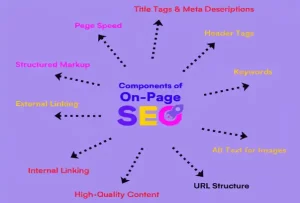
on-page-seo-component

10 steps to on-page SEO

Once you are aware of all that you need to take into account for on-page SEO, have completed your content audit, and are aware of your keyword rankings, there are 10 steps to getting the most out of optimizing and editing your page content for search.

  1. Page content

Google ranks pages because it has found they are the most useful responses to the searcher’s question. That is, your page must be better than any of Google’s other pages for it.

Not only that, but you also have to think about keyword density on your web pages so you don’t keyword stuff and get penalized. Most SEO specialists agree that ideal keyword density sits at 1-2%. That is, for every 100 words of text, the primary keyword is included 1-2 times.

It’s also a healthy habit to include your primary keyword once in the initial 100-150 words of your article since Google places a higher ranking on terms that appear early in your webpage. It’s an old-fashioned on-page SEO strategy that works even today.

Besides structure, what’s also important is the content on your pages so you can drive more dwell time. Indeed, KPIs to inform you whether your page is doing well might be time on page and bounce rate. And, if your content is short or too detailed, you can insert videos so you can minimize bounce rates and get more dwell time.

Your average time on page is 60 seconds. This is the bare minimum for the content to possibly answer the query of the searcher.  Be sure that you’re also following a link building strategy.

  1. Meta text and title tags

Your title tag is more powerful than you may ever know. It’s what others read if you were to suddenly appear on Google. Include keywords, keep them below 70 characters, and ensure your title tags provide value to the reader and get them curious to find out more. This also involves optimizing your organic click through rate (CTR), which can get more traffic flowing to your site. Meta descriptions are what appear under your site’s title tag on the SERPs. They prompt a user to click on your listing instead of someone else’s for that query and also influence on your organic CTR.

If you’re not using a meta description, Google will show some of your page content. It may be navigation links and other things that aren’t quite as interesting, so it’s best practice to craft something unique. Don’t use duplicates.

  1. Headings Don’t forget

Organization is key. Your header tags provide structure to your article while offering your readers context and tell them what to expect.  Ensure your post information is well organized, and remember to use the correct header tags to reflect a uniform information structure- H1, H2, H3, H4 and so on. Your title must always be your H1, primary descriptive page title with primary keyword or phrase, and then your H2 etc., having keyword variations. It’s best practice to include only one H1 on every one of your pages in order to make them focused on a single topic.

  1. URL structure

Shorter URLs are best practice and make your pages more popular because they’re easier to read, user-friendly, and shareable. Using URLs correctly can also enhance click-through rates when links are shared. Make your URLs standard and shorter–use hyphens, not underscores, and keep them related to the content on the page.

  1. Alt text

    You need to always keep an eye on image optimization. Descriptiveness is essential and should be applied to image names that include the images as well, and image optimization concerns size and quality as well. Alt image text aids screen-reading software in describing images to the visually impaired readers and enables search engine spiders to more effectively crawl and index your website. It’s another decent method of including some keywords in your post. Though, you should make sure that the principal images on every page of your site are given alt tags to accurately describe the content. Utilize variations of your target keyword in alt images, but don’t keyword spam the same term repeatedly. That will harm your SEO and can even cause Google to ‘blacklist’ your content.


  1. Page loading speed

 Load time is important. Always. Users are far more likely to stay on fast-loading pages — a two-second load sees only 9% bounce, but at five seconds, that number climbs to 38%. What’s the point in optimizing your content if visitors are going to bounce as it loads? Google’s page speed insights tool will offer more information on the page speed score of your site and how to maximize this. If you prefer a breakdown, WebPageTest is also a useful tool to utilize. As you can see below, the slower page speeds for this website are primarily caused by JavaScript and image file size. Here, the emphasis should be on image compression and code optimization. This entails minimizing the JavaScript size, e.g., removing spaces, commas, formatting, and other unused or unnecessary characters.

  1. Mobile first

Always be sure your website is mobile-friendly. Over 60% of total search volume comes from smartphones, based on Google mobile search data. 53% of mobile page views are abandoned if the page loads more than three seconds. Not only is a responsive page necessary, but also a healthy mobile speed score for your site (average is 50-89 out of 100). Apart from considering responsive design features, Google also considers your mobile page’s performance as a ranking signal. You can also employ accelerated mobile pages (AMP) for fast load times for cell phone users. AMP pages are basically lightweight HTML versions of current webpage content that load much quicker than normal HTML5 pages.

  1. Internal linking

    When you connect to other web pages on your website, you make it so that search engine spiders are able to index all your website’s web pages. You also transfer link equity (ranking authority) to other web pages on your site, which also benefits visitors by allowing them to move throughout your site. This particularly applies when you are building a topic cluster strategy for content. Internal links are probably one of the most underutilized link building strategies in SEO marketing. Investing time into optimizing your site’s internal linking strategy always leads to noticeable gains very fast. Some marketers notice very fast wins from including even a single or two internal links from authoritative pages on another part of your site.

  2. Schema markup

    Inserting Schema markup into your HTML enhances how your page is viewed within SERPs by making richer snippets rendered under the page title. Schema is the outcome of collaboration among Google, Bing, Yandex, and Yahoo! to assist you in giving the information their search engines require to comprehend your content to render the best search outcomes possible. For instance, in the following example, the initial search engine result includes a rich snippet star review rating that may be added by using Schema. The second and third examples will show either the meta description or additional information selected by Google.


  1. User experience

All of these amount to the integrated user experience on your page. It is a collection of signals that quantify the way users are viewing the experience of engaging with the page beyond its sheer information value. Signals encompass a website’s visuals, loading efficiency, mobile support, visibility, and user experience. User experience is also an effective method of enhancing dwell time on your page. This may include anything that simplifies your content for reading, including: Alternating between text and graphics, dividing long paragraphs into smaller ones, including additional subheadings, including bullets, employing video content, recommending related content, and Including summaries.


SEO Toolkit

Below are some useful tools to employ as you begin creating and implementing your SEO plan and tracking performance to optimize in the future.

Google Page Speed Insights Tool

Tests your site health, inspects your page and identifies major areas where you can achieve quicker load times and increased SERP rankings.

Google Search Console

Enables you to simply monitor and resolve server problems, site loading problems, and security problems such as hacking and malware. You can also employ it to make sure any maintenance or changes to your site occur without a hitch in terms of search performance.

Semrush

Enables you to detect and monitor keywords that your competitors or other sites rank for.

Screaming Frog

Allows you to locate broken links, make sure your redirects were created correctly, audit your page titles, create XML sitemaps and even find duplicate content.


In 2025, Artificial Intelligence (AI)

assumes a more advanced and unified function in streamlining on-page SEO, evolving from simple automation to offering more in-depth insights, more accurate suggestions, and even dynamic tuning.

Below are ways in which AI affects on-page SEO in 2025:

  • Elevated Content Creation & Optimization:

AI-Driven Content Creation: Although entirely automated, high-quality content creation is yet to mature. AI applications in 2025 are extremely capable of creating outlines, writing sections, and elaborating on subjects. They can generate original angles from large data sets, making content comprehensive as well as differentiated.

Semantic SEO & Topical Authority: AI algorithms are much more capable of grasping the complex interconnections of words and ideas. They not only optimize content for specific keywords, but for whole subjects too, so that the content addresses all the connected entities and sub-topics that a search engine (and user) will anticipate. This creates solid topical authority.

Readability & Engagement Scoring: AI evaluates content for readability (Flesch-Kincaid, Hemingway App-like functionality) and forecasts engagement from patterns in successful content. It offers recommendations to enhance flow, clarify language, and include features that hold user attention.

AI-powered Internal Linking: AI recognizes the best applicable and most effective internal linking opportunities on a site, assisting in sharing link equity, making it more crawlable, and flowing users through associated content effortlessly.

  • Hyper-Personalized Keyword Research & Intent Comprehension:

Forecast Keyword Trends: AI reviews enormous volumes of search activity, social trends, and news to forecast rising keywords and changes in intent, enabling SEOs to exploit new opportunities ahead of competitors.

Deep User Intent Analysis: AI moves beyond keyword matching at the surface to identify the actual intent behind a user’s search (informational, navigational, commercial, transactional). It then suggests content tweaks to accurately align with that intent, resulting in improved rankings and improved conversions.

Long-Tail & Niche Identification: AI can identify extremely specific, long-tail keywords and niche subjects that human researchers may overlook, revealing less competitive but very valuable traffic.

  • Proactive Technical SEO Audits & Solutions:

Automated Site Health Monitoring: AI-powered tools continuously monitor websites for technical SEO issues such as broken links, crawl errors, indexing problems, duplicate content, and canonicalization errors.

Performance Optimization Recommendations: AI analyzes website speed metrics and suggests precise, actionable steps to improve Core Web Vitals and overall site performance, often identifying bottlenecks that are not immediately obvious to humans.

Mobile-First Optimization: AI optimizes content and structure to be ideally responsive and optimized on all mobile devices, essential for Google’s mobile-first indexing.

  • Improved User Experience (UX) Analysis:

Behavioral Pattern Recognition: AI observes the behavior of users on each page (scroll depth, click-through rates, time on page, bounce rate) to detect friction points or disinterest areas. It then proposes customized UX improvements such as layout modifications, CTA positioning, or restructuring of content to increase engagement.

A/B Testing & Optimization: AI can optimize and automate A/B testing of various on-page components, like headlines, calls-to-action, or image locations, immediately determining the most efficient variations.

  • Dynamic On-Page Adjustments:

Adaptive Content: In certain sophisticated situations, AI may allow for minimal dynamic on-page content adjustments (e.g., personalized headings or product suggestions) according to user segmentation or real-time information, without losing SEO integrity.

Schema Markup Generation: The AI automatically generates correct and extensive formulas of schema markup for different content types, facilitating search engines to effectively understand and present content in rich results.

  • Competitor & SERP Landscape Analysis:

SERP Feature Optimization: AI scans the existing SERP (Search Engine Results Page) for a query and detects chances for certain formulas such as featured snippets, knowledge panels, or video carousels and subsequently provides on-page optimization instructions to aim at those.

Competitive Gap Analysis: AI can instantaneously compare your competitors’ on-page strategies, note content gaps, keyword opportunities they are ranking for, and where your content can outrank.

It should be remembered that though AI is extremely powerful, it is an assistant to the SEO expert in 2025. Human oversight, strategic decisions, and creative input are still imperative to ensure ethical procedures, keep up the brand voice, and adjust to the constantly changing search terrain and Google’s policies for AI-compiled content.


Lorem Ipsum Dolor Sit Amet, Consectetur Adelore Eiusmod Tempor Incididunt

Lorem ipsum dolor sit amet, consectetur adipiscing elit. Sed euismod diam sed sapien mattis tincidunt. Nulla facilisi. Sed consectetur id tortor in finibus. Donec pellentesque nibh libero, a euismod sapien condimentum vitae. Ut porta lacus nisl, luctus molestie erat rhoncus ac. Integer interdum dolor et velit rutrum gravida. Duis aliquam laoreet convallis.

Etiam eleifend ante euismod, porttitor purus eu, sollicitudin dui. Duis elementum arcu purus, id tincidunt justo molestie eget. Cras et lacus et metus fermentum mollis. Nam velit metus, dapibus a ligula at, cursus auctor sem. Vivamus vitae purus non enim aliquet malesuada. Integer et ante eget neque sollicitudin vulputate eu et dui. Suspendisse elementum pellentesque lorem, sit amet lobortis lectus tincidunt ac. Sed vel magna ut libero viverra feugiat ac viverra orci. Fusce ac ultrices lectus. Etiam eget auctor eros, vitae molestie sapien. Curabitur aliquet purus diam, vel ultrices urna rutrum quis.

Maecenas id facilisis sem. Sed iaculis felis odio, non imperdiet urna auctor ut. Nam lectus ligula, gravida in ex nec, dignissim aliquam purus. Etiam suscipit lectus in quam dapibus malesuada. Sed non velit nec turpis pulvinar egestas. Sed augue justo, ultricies et ante sit amet, bibendum congue diam. Vestibulum venenatis accumsan magna elementum tristique. Sed lacinia ac dui eu commodo. Curabitur pharetra mi at erat venenatis vestibulum. Donec mi arcu, gravida et purus placerat, fringilla ultricies odio.

Aliquam eleifend nec est et accumsan. In eleifend tortor ut felis laoreet imperdiet eget non nisi. Fusce sollicitudin eget sem eget dapibus. Cras ornare massa id erat varius, ac ultrices enim varius. Curabitur tortor mi, molestie at pulvinar quis, porta nec odio. Sed at luctus arcu. Praesent facilisis eros nec risus finibus, quis scelerisque urna venenatis. Maecenas iaculis metus dui, sed cursus orci condimentum maximus. Aliquam tortor dui, feugiat ac sem tempus, rutrum tincidunt nulla. Cras at egestas tortor. Nunc finibus ut turpis ac maximus.

Pellentesque dictum convallis turpis id ullamcorper. Curabitur porttitor magna ac ornare eleifend. Proin facilisis posuere ipsum ac feugiat. Mauris feugiat tempor sem condimentum varius. Curabitur non tristique lacus, id elementum mi. Nulla iaculis convallis varius. Sed rutrum ornare nulla, ac tristique dui iaculis et. Fusce ut ex ac leo consequat euismod. Cras sed risus vitae eros ultricies semper.

Lorem Ipsum Dolor Sit Amet, Consectetur Adelore Eiusmod Tempor Incididunt

Lorem ipsum dolor sit amet, consectetur adipiscing elit. Sed euismod diam sed sapien mattis tincidunt. Nulla facilisi. Sed consectetur id tortor in finibus. Donec pellentesque nibh libero, a euismod sapien condimentum vitae. Ut porta lacus nisl, luctus molestie erat rhoncus ac. Integer interdum dolor et velit rutrum gravida. Duis aliquam laoreet convallis.

Etiam eleifend ante euismod, porttitor purus eu, sollicitudin dui. Duis elementum arcu purus, id tincidunt justo molestie eget. Cras et lacus et metus fermentum mollis. Nam velit metus, dapibus a ligula at, cursus auctor sem. Vivamus vitae purus non enim aliquet malesuada. Integer et ante eget neque sollicitudin vulputate eu et dui. Suspendisse elementum pellentesque lorem, sit amet lobortis lectus tincidunt ac. Sed vel magna ut libero viverra feugiat ac viverra orci. Fusce ac ultrices lectus. Etiam eget auctor eros, vitae molestie sapien. Curabitur aliquet purus diam, vel ultrices urna rutrum quis.

Maecenas id facilisis sem. Sed iaculis felis odio, non imperdiet urna auctor ut. Nam lectus ligula, gravida in ex nec, dignissim aliquam purus. Etiam suscipit lectus in quam dapibus malesuada. Sed non velit nec turpis pulvinar egestas. Sed augue justo, ultricies et ante sit amet, bibendum congue diam. Vestibulum venenatis accumsan magna elementum tristique. Sed lacinia ac dui eu commodo. Curabitur pharetra mi at erat venenatis vestibulum. Donec mi arcu, gravida et purus placerat, fringilla ultricies odio.

Aliquam eleifend nec est et accumsan. In eleifend tortor ut felis laoreet imperdiet eget non nisi. Fusce sollicitudin eget sem eget dapibus. Cras ornare massa id erat varius, ac ultrices enim varius. Curabitur tortor mi, molestie at pulvinar quis, porta nec odio. Sed at luctus arcu. Praesent facilisis eros nec risus finibus, quis scelerisque urna venenatis. Maecenas iaculis metus dui, sed cursus orci condimentum maximus. Aliquam tortor dui, feugiat ac sem tempus, rutrum tincidunt nulla. Cras at egestas tortor. Nunc finibus ut turpis ac maximus.

Pellentesque dictum convallis turpis id ullamcorper. Curabitur porttitor magna ac ornare eleifend. Proin facilisis posuere ipsum ac feugiat. Mauris feugiat tempor sem condimentum varius. Curabitur non tristique lacus, id elementum mi. Nulla iaculis convallis varius. Sed rutrum ornare nulla, ac tristique dui iaculis et. Fusce ut ex ac leo consequat euismod. Cras sed risus vitae eros ultricies semper.

Lorem Ipsum Dolor Sit Amet, Consectetur Adelore Eiusmod Tempor Incididunt

Lorem ipsum dolor sit amet, consectetur adipiscing elit. Sed euismod diam sed sapien mattis tincidunt. Nulla facilisi. Sed consectetur id tortor in finibus. Donec pellentesque nibh libero, a euismod sapien condimentum vitae. Ut porta lacus nisl, luctus molestie erat rhoncus ac. Integer interdum dolor et velit rutrum gravida. Duis aliquam laoreet convallis.

Etiam eleifend ante euismod, porttitor purus eu, sollicitudin dui. Duis elementum arcu purus, id tincidunt justo molestie eget. Cras et lacus et metus fermentum mollis. Nam velit metus, dapibus a ligula at, cursus auctor sem. Vivamus vitae purus non enim aliquet malesuada. Integer et ante eget neque sollicitudin vulputate eu et dui. Suspendisse elementum pellentesque lorem, sit amet lobortis lectus tincidunt ac. Sed vel magna ut libero viverra feugiat ac viverra orci. Fusce ac ultrices lectus. Etiam eget auctor eros, vitae molestie sapien. Curabitur aliquet purus diam, vel ultrices urna rutrum quis.

Maecenas id facilisis sem. Sed iaculis felis odio, non imperdiet urna auctor ut. Nam lectus ligula, gravida in ex nec, dignissim aliquam purus. Etiam suscipit lectus in quam dapibus malesuada. Sed non velit nec turpis pulvinar egestas. Sed augue justo, ultricies et ante sit amet, bibendum congue diam. Vestibulum venenatis accumsan magna elementum tristique. Sed lacinia ac dui eu commodo. Curabitur pharetra mi at erat venenatis vestibulum. Donec mi arcu, gravida et purus placerat, fringilla ultricies odio.

Aliquam eleifend nec est et accumsan. In eleifend tortor ut felis laoreet imperdiet eget non nisi. Fusce sollicitudin eget sem eget dapibus. Cras ornare massa id erat varius, ac ultrices enim varius. Curabitur tortor mi, molestie at pulvinar quis, porta nec odio. Sed at luctus arcu. Praesent facilisis eros nec risus finibus, quis scelerisque urna venenatis. Maecenas iaculis metus dui, sed cursus orci condimentum maximus. Aliquam tortor dui, feugiat ac sem tempus, rutrum tincidunt nulla. Cras at egestas tortor. Nunc finibus ut turpis ac maximus.

Pellentesque dictum convallis turpis id ullamcorper. Curabitur porttitor magna ac ornare eleifend. Proin facilisis posuere ipsum ac feugiat. Mauris feugiat tempor sem condimentum varius. Curabitur non tristique lacus, id elementum mi. Nulla iaculis convallis varius. Sed rutrum ornare nulla, ac tristique dui iaculis et. Fusce ut ex ac leo consequat euismod. Cras sed risus vitae eros ultricies semper.

Lorem Ipsum Dolor Sit Amet, Consectetur Adelore Eiusmod Tempor Incididunt

Lorem ipsum dolor sit amet, consectetur adipiscing elit. Sed euismod diam sed sapien mattis tincidunt. Nulla facilisi. Sed consectetur id tortor in finibus. Donec pellentesque nibh libero, a euismod sapien condimentum vitae. Ut porta lacus nisl, luctus molestie erat rhoncus ac. Integer interdum dolor et velit rutrum gravida. Duis aliquam laoreet convallis.

Etiam eleifend ante euismod, porttitor purus eu, sollicitudin dui. Duis elementum arcu purus, id tincidunt justo molestie eget. Cras et lacus et metus fermentum mollis. Nam velit metus, dapibus a ligula at, cursus auctor sem. Vivamus vitae purus non enim aliquet malesuada. Integer et ante eget neque sollicitudin vulputate eu et dui. Suspendisse elementum pellentesque lorem, sit amet lobortis lectus tincidunt ac. Sed vel magna ut libero viverra feugiat ac viverra orci. Fusce ac ultrices lectus. Etiam eget auctor eros, vitae molestie sapien. Curabitur aliquet purus diam, vel ultrices urna rutrum quis.

Maecenas id facilisis sem. Sed iaculis felis odio, non imperdiet urna auctor ut. Nam lectus ligula, gravida in ex nec, dignissim aliquam purus. Etiam suscipit lectus in quam dapibus malesuada. Sed non velit nec turpis pulvinar egestas. Sed augue justo, ultricies et ante sit amet, bibendum congue diam. Vestibulum venenatis accumsan magna elementum tristique. Sed lacinia ac dui eu commodo. Curabitur pharetra mi at erat venenatis vestibulum. Donec mi arcu, gravida et purus placerat, fringilla ultricies odio.

Aliquam eleifend nec est et accumsan. In eleifend tortor ut felis laoreet imperdiet eget non nisi. Fusce sollicitudin eget sem eget dapibus. Cras ornare massa id erat varius, ac ultrices enim varius. Curabitur tortor mi, molestie at pulvinar quis, porta nec odio. Sed at luctus arcu. Praesent facilisis eros nec risus finibus, quis scelerisque urna venenatis. Maecenas iaculis metus dui, sed cursus orci condimentum maximus. Aliquam tortor dui, feugiat ac sem tempus, rutrum tincidunt nulla. Cras at egestas tortor. Nunc finibus ut turpis ac maximus.

Pellentesque dictum convallis turpis id ullamcorper. Curabitur porttitor magna ac ornare eleifend. Proin facilisis posuere ipsum ac feugiat. Mauris feugiat tempor sem condimentum varius. Curabitur non tristique lacus, id elementum mi. Nulla iaculis convallis varius. Sed rutrum ornare nulla, ac tristique dui iaculis et. Fusce ut ex ac leo consequat euismod. Cras sed risus vitae eros ultricies semper.