In today’s digital world SEO can be a game – changer for small business or local markets. In both big and small markets, SEO isn’t just an option – it’s a must have strategy for long – term business success.
First we need to know the word SEO comes from where. Several account points to 1997 as the year the term “search engine optimization was first used. One story involves the Band Jefferson Starship, whose website’s ranking improved after its manager started optimizing it. But SEO mainly originated in the mid-1990s and the term was coined around 1997,possibly by a band manager or a marketing executive, after web pages started outranking their original content.
Founder :
There is no single “ founder” of SEO, as it evolved over time with many contributors, but Bruce Clay is widely recognized as the “father of SEO”. While Google’s algorithm is the foundation , individuals like Bruce Clays and Leland Harden are considered early pioneers who helped establish SEO as an industry.
Types of SEO :
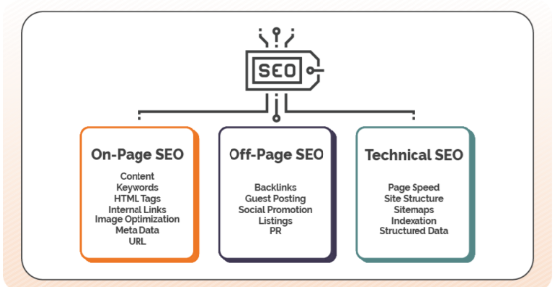
There are mainly three types of SEO.
Off – Page SEO
On Page – SEO :
On – Page SEO is the process of optimizing web pages and their content for both search engines and users. Its can help rank pages higher on Google and drive more organic traffic. Common tasks associated with On – Page SEO include optimizing for title tags, internal links and content.
Checklist:
Title:
The title tag is the most important on page SEO element and usually target keywords present in this content types helps return relevant pages on search engines.
Target Keywords :
Confirm that you’re targeting the right keywords and that they haven’t been overused. Make sure your content satisfies the search intent behind your target keywords.
Content :
Create unique ,valuable, and use – focused content that satisfies the search intent
Images & Videos :
Use high quality, appropriately sized, and compressed images with descriptive file name and alt tags.
Include high quality, relevant, and optimized videos to enhance user engagement.
Meta description :
Write a compelling ,unique description with your keywords to encourage clicks.
Heading :
Use a clear heading structure (H1,H2,H3etc.), with your main keywords in the H1 tag.
Why on – page SEO is important
Higher ranking:
Proper on – page SEO helps your pages rank higher in search engine result pages.
More organic traffic :
This leads to more qualified visitors finding your content through search engines.
User experience :
Many on – page factors, such as site speed and high – quality content, directly improve the user experience.
Full control :
Unlike off – page SEO, which relies on external factors, on – page SEO is entirely within your control, making it a reliable strategy to build upon.
Off – Page SEO :
Off – Page SEO is a type of search engine optimization that uses off – site optimizations to improve a website’s or page’s rankings in relevant search results. Off – site optimizations occur outside your site and include link building, local citations and more.
Checklist :
Backlink audit and building:
Focus on building high – quality backlink from reputable sites.
Competitor analysis :
Analyze your competitor’s backlink profiles to find opportunities and understand their strategies.
Local SEO:
Optimize your Google My Business profile, encourage customer reviews and ensure your business is listed in local directories.
Brand building :
Earn brand mentions share content on social media, and build a strong social media presence.
Content promotion:
Submit unique content to sites like document sharing, image submission and video submission platforms.
Influencer marketing :
Collaborate with influencers to expand your reach.
Why off – page SEO is important
Higher search engine rankings:
Off – page SEO helps your website rank higher on search engine results pages (SERPs) by showing search engines that other sites endorse your content as valuable.
Increased domain authority :
Building backlinks from reputable websites strengthens your website’s authority, which is a key factor in improving search rankings.
Improve trust and credibility :
Actions like getting positive reviews, mentions in the media, and links from authoritative source signal to search engines that your site is a trustworthy and reliable source of information.
More referral traffic:
Backlink and social media shares can drive visitors directly to your website, leading to more referral traffic.
Enhanced brand awareness :
When other websites, social media platforms, and forums mention your brand, it increases your brand’s visibility and recognizability.
Expanded online presence :
Off – page activities like content sharing and social media engagement extend your digital footprint beyond your own website.
Better local search visibility :
Citations and reviews can boost your local search engine optimization (SEO) presence, making your business more visible in local results.
Technical SEO:
Technical SEO is about improving your website to make it easier for search engines to find, understand, and store your content. It also involves user experience factors. Such as making your website faster and easier to use on mobile devices.
Checklist:
Crawlability :
Crawlability is about ensuring that search engine bots can efficiently explore and index your website. Here are the key steps:
Create an XML sitemap:
This serves as a roadmap for search engine bots to navigate your site’s content.
Robots.txt file:
Configure it correctly to allow or disallow bots from crawling specific parts of your website.
Fix broken links:
broken links can hinder the crawling process, so regularly check and repair them.
Minimize redirects:
Avoid using too many redirects as they can slow down the crawling process.
Indexability :
Indexability ensures that your important pages are discoverable and properly indexed. Here’s what you should focus on:
Robot.txt rules:
Make sure you’re not unintentionally blocking crucial pages with overly restrictive robots.txt rules.
Titles and Meta Description:
Create unique and informative titles and meta descriptions for each page, as they play a significant role in search rankings.
Content Quality:
Content quality is crucial for engaging users and maintaining search engine trust. Key steps include:
High – quality content :
Create engaging, high – quality content that resonates with your target audience.
Structured data :
Implement schema mark-up to give search engines more information about your content and potentially earn rich snippets.
Mobile – Friendliness :
A mobile – friendly website is a must in the mobile – centric digital world. In technical SEO for this, ensure:
Responsive web design :
Implement a responsive web design to offer a seamless experience on all device.
Mobile testing :
Regularly test your website on various mobile devices to identify and address issues.
-
Page Speed :
- Page speed directly impacts user experience and SEO rankings. To optimize it.
Image optimization :
Optimize images to reduce page loading times.
File size reduction :
Minify HTML, CSS, and Java script files to minimize their size.
Caching plugin :
Utilize a caching plugin to store frequently accessed data, improving page load times.
Security :
A secure website is crucial for both user trust and SEO . Here’s what you should do:
HTTPS : Serve your website over HTTPS, enhancing user trust and SEO rankings.
Plugin and theme updates :
keep your WordPress plugins and themes up – to – date to mitigate vulnerabilities.
Internal Linking :
Internal linking in technical – SEO enhances navigation and helps search engines understand your site’s hierarchy. Optimize it with this tips:
Relevant internal links :
Include relevant internal links within your content, guiding users to other valuable pages on your site.
Why Technical – SEO is important
Improved organic search rankings
Increased traffic
Reduced bounce rate
Improve user experience
Increased conversions
No Comments